
Ankle Fracture
Expert care for ankle fractures focused on proper healing, stability, and full recovery.
Services List
Need Help?
Our team is here to help you with the best treatment.

Expert Diagnosis & Treatment to Restore Strength, Stability, and Mobility
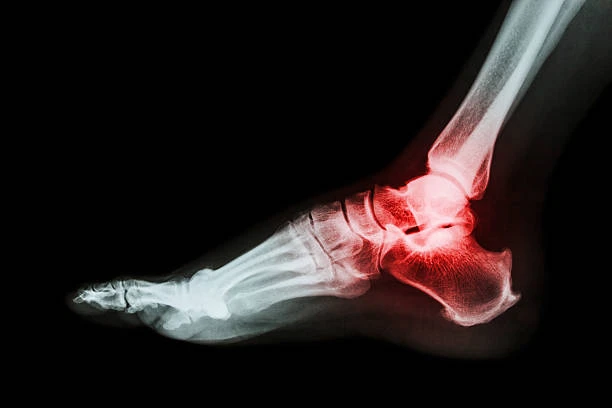
A broken ankle—also known as an ankle fracture—occurs when one or more of the bones that form the ankle joint are cracked or broken. These include the tibia (shinbone), fibula (outer ankle bone), and talus, which connects the leg to the foot.
Ankle fractures range from minor, stable breaks to complex injuries involving multiple bones and joint surfaces. Because symptoms can closely mimic a sprain, proper evaluation is critical to ensure accurate diagnosis and the right treatment plan.
Is it a Sprain or a Break?
It’s not always easy to tell the difference. Both ankle sprains and fractures can cause pain, swelling, and difficulty walking. The key difference:
- Sprain: Injury to ligaments (soft tissue)
- Fracture: Break in one or more bones
If pain is severe, worsening, or doesn’t improve, it’s important to be evaluated by a foot and ankle doctor to avoid complications or delayed healing.
Common Symptoms of an Ankle Fracture
- Immediate pain following injury
- Swelling and bruising around the ankle
- Pain that worsens with weight-bearing
- Limited mobility or inability to walk
- Tenderness that may extend into the foot or up the leg


What Causes a Broken Ankle?
Most ankle fractures occur due to sudden trauma or twisting injuries, including:
- Rolling or twisting the ankle while walking or running
- Sports injuries or high-impact activity
- Falls or direct blows to the ankle
There are also stress fractures, which develop over time due to repetitive impact—often seen in runners, athletes, or individuals who rapidly increase activity levels.
Types of Ankle Fractures
Ankle fractures are classified based on which bones are involved and the severity of the injury:
- Lateral Malleolus Fracture – Break on the outside of the ankle (most common)
- Bimalleolar Fracture – Involves both the inner and outer ankle bones
- Trimalleolar Fracture – A more complex injury affecting three parts of the ankle
- Pilon Fracture – Involves the weight-bearing surface of the ankle joint, typically from high-impact trauma
Fractures may also be:
- Nondisplaced – Bones remain properly aligned
- Displaced – Bones have shifted out of position and require more advanced treatment
Diagnosis: Getting the Full Picture
Accurate diagnosis is essential for proper healing and long-term joint health.
- X-rays – First step to confirm a fracture
- CT Scan or MRI – Used when more detail is needed to evaluate complex injuries or soft tissue damage
Treatment Options
Treatment depends on the severity of the fracture, alignment of the bones, and stability of the joint.
Non-Surgical Treatment
For stable, well-aligned fractures:
- Immobilization with a cast, splint, or walking boot
- Limited or protected weight-bearing
- Gradual return to activity as healing progresses
Surgical Treatment
For displaced or unstable fractures, surgery may be required to:
- Realign the bones precisely
- Stabilize the joint with plates, screws, or other hardware
- Prevent improper healing (malunion) and long-term complications
Even small misalignments—as little as 2 millimeters—can significantly increase the risk of future arthritis, making proper treatment essential.

Recovery & Rehabilitation
Healing timelines vary, but most fractures follow a structured recovery process:
- First 4–6 weeks: Limited or no weight-bearing
- 6 weeks and beyond: Gradual return to weight-bearing after healing is confirmed
- Physical therapy: Restores strength, flexibility, and stability
Full recovery may take several months depending on the severity of the injury and individual activity goals.
Why Early Treatment Matters
Ankle fractures don’t just heal—they heal either correctly or incorrectly.
Without proper care, complications can include:
- Chronic instability
- Reduced mobility
- Long-term joint damage
- Increased risk of ankle arthritis
Prompt evaluation and expert treatment give you the best chance for a full recovery and long-term joint health.
Sports Medicine Approach to Ankle Fractures
Recover Faster. Move Better. Return Stronger.
For active individuals and athletes, an ankle fracture isn’t just an injury—it’s a disruption to performance, training, and daily movement. Our sports medicine approach is designed to not only heal the fracture, but to restore strength, stability, and confidence in your ankle as much as possible for maximum performance.
Performance-Focused Care Includes:
Movement & Biomechanical Analysis
We evaluate how you walk, run, and move to identify the underlying factors that contributed to your injury—and correct them.
Structured Return-to-Sport Planning
A step-by-step progression that safely rebuilds load, impact tolerance, and agility—so you don’t come back too soon or re-injure the ankle.
Strength & Stability Training
Targeted rehabilitation to restore balance, proprioception, and joint control—critical for preventing future injuries.
Sport-Specific Rehabilitation
Customized recovery programs tailored to your activity—whether that’s running, golf, tennis, or high-impact sports.
Performance Optimization
We don’t just get you back—we help you return stronger, more efficient, and more resilient than before your injury.
Built for Active Lifestyles
Whether you're training, competing, or simply want to stay active without limitation, our goal is to help you recover fully and perform at your highest level—without fear of re-injury.
Get Expert Care for Your Ankle Injury
If you suspect a fracture or are dealing with ongoing ankle pain, don’t wait.
Early diagnosis and the right treatment plan can make all the difference.
Schedule your consultation today and take the first step toward a full recovery.